
Positive Reinforcement Training for Birds: What It Is and Why It Works
When people hear the word “training,” they sometimes picture strict commands or rigid routines. But training a bird doesn’t have to feel intense or intimidating. In fact, the most effective bird training methods are built on trust, communication, and encouragement.
Positive reinforcement training is widely considered the gold standard in modern animal behavior, as it can help strengthen the bond between pets and owners, build confidence, and help pets learn in a way that feels safe and rewarding. Read on to learn more about positive reinforcement training for birds and why it works so well.
What is Positive Reinforcement?
Positive reinforcement means rewarding a behavior you want to see more often. For instance:
- Your bird performs a behavior
- You immediately reward that behavior
- The behavior becomes more likely to happen again
In this context, the word “positive” doesn’t mean “good”—it means that something is added. “Reinforcement” means the behavior increases.
For birds, rewards might include:
- A favorite treat
- Verbal praise
- Head scratches (if your bird enjoys them)
- Access to a favorite toy
- Clicker training markers (also called “bridges”) followed by a reward
With training markers or bridges, a clicker first becomes associated with something positive by consistently pairing the click with a treat. Over time, the click itself tells your bird, “Yes—that’s exactly what I wanted!” and lets them know a reward is coming.
If the behavior increases over time, you’ll know the reinforcement is working.
Why Positive Reinforcement Works Well for Birds
Birds are intelligent, emotionally complex animals. Many parrot species have cognitive abilities comparable to young children, and even smaller birds are highly perceptive and responsive to their environment. Positive reinforcement works because it can have the following effects:
Builds Trust
Your bird learns that interacting with you leads to positive experiences and rewarding opportunities to learn. Regular training sessions provide mental stimulation, help prevent boredom, encourage trust, and strengthen the unique bond you share rather than creating fear or anxiety.
Encourages Willing Participation
Your bird chooses to participate because they expect something rewarding—not because they’re avoiding punishment. If an unwanted behavior occurs, the most effective response is often to calmly withhold attention and rewards rather than reacting emotionally. When appropriate, briefly ending the training session or pausing interaction teaches that desired behaviors earn rewarding opportunities, while unwanted behaviors simply do not.
Reduces Fear and Stress
Punishment-based methods can damage trust and increase anxiety. Positive reinforcement, on the other hand, keeps training sessions safe and predictable.
Improves Communication
Training helps you better understand your bird’s body language and signals, creating clearer two-way communication.
What to Avoid When Practicing Positive Reinforcement
It’s just as important to understand what this method avoids. Positive reinforcement training does not include:
- Yelling
- Forceful handling
- Spraying with water
- Tapping or flicking the beak
- Punishing “bad” behavior
- Withholding your bird’s normal daily diet
Your bird should always have access to their normal daily diet. While favorite treats can be reserved as special training rewards, withholding regular food or using hunger as motivation is not appropriate. Punishment may stop a behavior temporarily, but it often increases fear, damages trust, and can even worsen unwanted behaviors over time.
What Can You Teach Your Bird with Positive Reinforcement?
The possibilities are virtually endless! Many bird owners use positive reinforcement to teach:
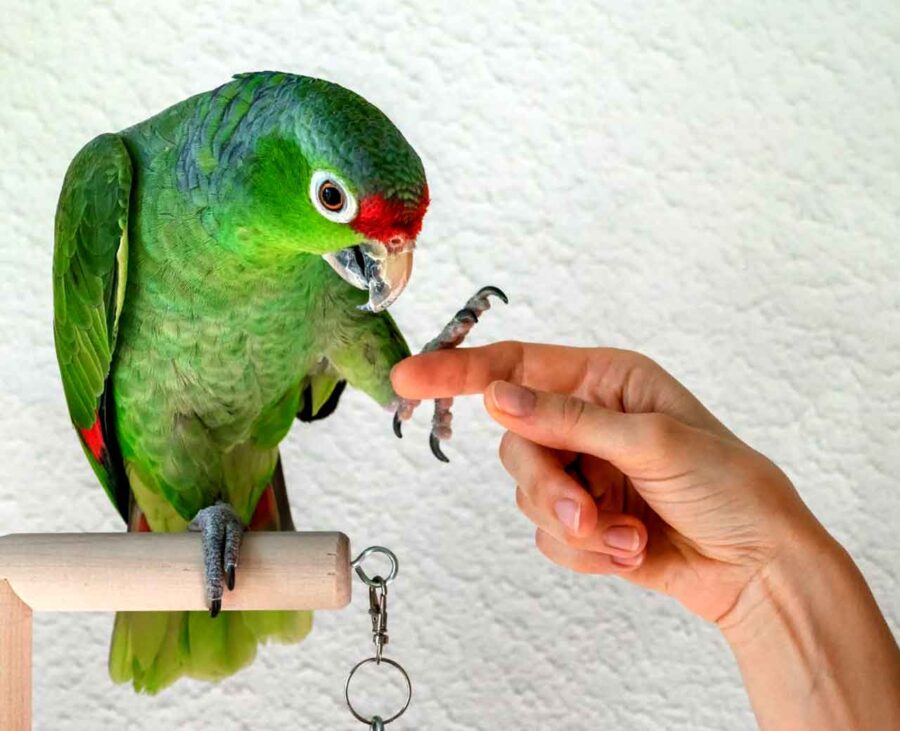
- Step-up and recall
- Entering a carrier voluntarily
- Target training
- Nail trimming cooperation
- Harness acceptance
- Reduced biting through redirection
- Foraging behaviors
- Fun tricks like waving or turning around
Training isn’t just about learning tricks—it’s about helping your bird navigate the human world safely and confidently. Positive reinforcement can help birds become more comfortable with experiences that might otherwise feel frightening, such as entering a carrier, accepting a harness, or cooperating with grooming or veterinary care. As your bird builds confidence through successful experiences, everyday situations become less stressful for both of you.
How to Get Started with Positive Reinforcement Training
If you’re new to positive reinforcement, start simple. Here are a few steps to take:
- Choose a small, high-value treat.
- Keep sessions short (5–10 minutes).
- Train in a quiet, low-distraction space.
- If you’re using a clicker, begin by teaching your bird that the click predicts a reward. Repeatedly pair the click with a favorite treat until your bird consistently expects the reward after hearing the sound. Once that association is established, use the click immediately after the desired behavior before offering the treat.
- End on a success.
Remember that even unwanted attention can reinforce behavior. If your bird screams, bites for attention, or displays another unwanted behavior, reacting dramatically may unintentionally encourage it. When it’s safe to do so, remaining calm and neutral—and then rewarding your bird once they display the desired behavior—is more effective than scolding or reacting emotionally.
Training Strengthens Your Bond
One of the most beautiful outcomes of positive reinforcement training is the relationship it builds. Instead of feeling controlled, your bird will feel understood—they’ll gain a greater sense of control and choices in their life. The result fosters feelings of satisfaction for the bird, replacing previous frustration (and undesirable behaviors) when effective mutual communication is lacking. It is a win-win for both bird and pet parent.
Training becomes a shared activity focused on progress, patience, and partnership rather than perfection.
Ready to Start Training Your Bird?
Whether you’re teaching step-up, working on recall, or building trust with a shy bird, positive reinforcement offers a compassionate, science-based path forward.
If you’re looking for additional guidance, consider connecting with a qualified avian behavior professional who uses reward-based methods to support both you and your bird. With the right tools and approach, training can become one of the most enriching parts of life with your feathered companion.

